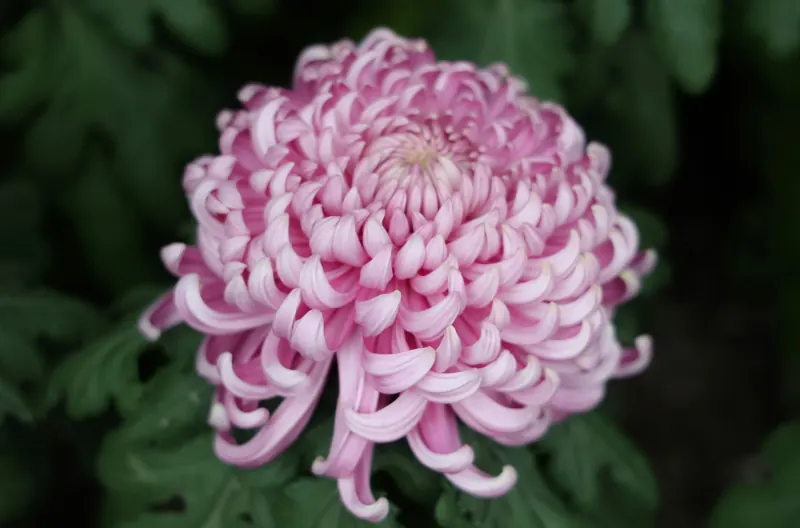
Every bloom on the Taqreeb-e-Gul bench in December is the end of a year's work. A show chrysanthemum — Gul-e-Daudi — is not difficult to grow, but it rewards a gardener who keeps to the calendar: cuttings in late winter, patient potting through the heat, careful stopping in summer and disbudding in autumn. This note follows one plant from the old stool to the show hall.
01 · January – FebruaryStart with good stock
After last season's flowers fade, cut the stems down to about 15 cm and keep the old plant — the "stool" — in a sunny, sheltered corner. Water it sparingly. As the days lengthen, fresh shoots push up from the base. These basal shoots, not the old woody stems, are what you will propagate.
Choose stools from plants that flowered well and true to their form. If a friend in the club grows a variety you admire, this is the season to ask for a few shoots — sharing stock is half of what the club is for.

02 · February – MarchTake cuttings
When the basal shoots are 6–8 cm long, take them with a sharp, clean blade just below a leaf joint. Remove the lowest leaves, and insert each cutting into a gritty, free-draining mix — sharp sand with leaf mould or coco peat works well. Keep the tray in bright shade and the mix just moist, never wet.
- Roots usually form in two to three weeks; gentle new growth at the tip is the sign.
- Label every cutting with its variety the moment you take it. A tray of unlabelled chrysanthemums is a puzzle you will not solve until November.
03 · April – JunePot on through the heat
Move rooted cuttings into small pots, then into larger ones as the roots fill each pot. For exhibition plants the final pot is usually 25–30 cm across. Use a rich but open mix: good garden soil, leaf mould or compost, well-rotted manure and enough sand for drainage.
The Punjab summer is the hardest stretch. Give plants morning sun and afternoon shade, water early in the day, and make sure pots never sit in standing water when the monsoon arrives.
One stem, one bloom: the whole of the plant's strength sent to the crown.
04 · May – JulyStopping, or pinching
When a young plant is about 15 cm tall, pinch out the growing tip. This "stop" makes it branch. For large single show blooms, keep only one to three strong stems and remove the rest. For bush plants, pinch each new shoot again when it has grown a few leaves, to build a full, rounded plant.
Stop pinching by late July or early August. Pinching later than this delays the buds, and your blooms may not open in time for the show.
05 · August – SeptemberStake and feed
Put stakes in early, before the stems need them, and tie loosely as they grow. Feed every two weeks during active growth with a balanced liquid feed, then switch to a feed richer in potash once the buds appear. Watch the undersides of leaves for aphids and leaf miners, and deal with them early.

06 · OctoberDisbud for a single bloom
At the tip of each stem a cluster of buds forms: one central crown bud with smaller side buds around it. For a show bloom, keep the crown bud and gently rub out the side buds as soon as they are large enough to handle. Work a little at a time over several days rather than all at once.
07 · NovemberProtect the bloom
As colour shows, the bloom is at its most delicate. Shade it from harsh afternoon sun, keep heavy dew and rain off the petals, and stop overhead watering. Many growers fix a simple paper or cloth shade above each bloom in the final weeks.
08 · DecemberTo the bench
Cut your blooms early in the morning, stand them in deep water somewhere cool overnight, and carry them upright. Read the schedule for your class — one bloom or a vase of three — and stage exactly what it asks for. The judges at Taqreeb-e-Gul look for freshness, a form true to its type, good size and depth, clean colour and healthy foliage.